New research shows distributed quantum computing can enable resilient and elastic systems at scale
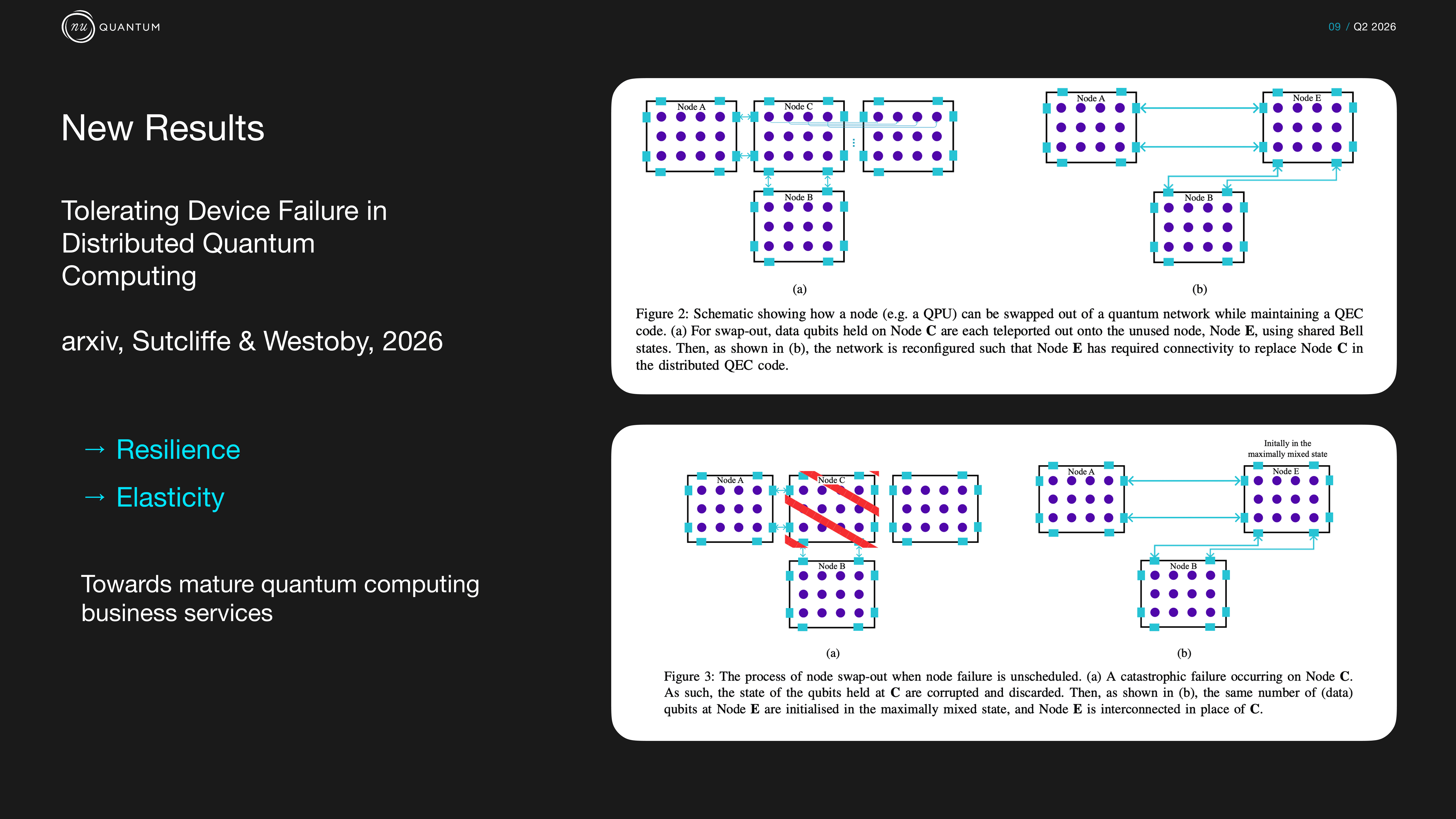
New research from Nu Quantum shows that networked, distributed quantum computing systems can be designed to tolerate the failure of individual Quantum Processing Units (QPUs).
Distributed quantum error correction allows computations to be resilient against both un-planned failures and planned maintenance or QPU calibration routines.
The research provides evidence that a scalable and highly-available fault tolerant quantum computing system can be created from fallible QPU sub-systems.
CAMBRIDGE, UK (June 10, 2026) – Nu Quantum, the category leader in distributed quantum computing, today announces new research showing that multi-node quantum networks can be designed to tolerate the complete failure of individual QPUs.
The simulations show that on a distributed system with quantum information encoded across the entire network rather than on a single-QPU, catastrophic node failure can become a correctable error. Information encoded across the wider network can still be recovered, so long as the failed node holds only a small fraction of the total error correction code. It also shows that when a replacement node is brought online, logical information can be transferred to it and operations can continue.
This work provides techniques for multi-QPU systems to support arbitrary length computations, compared to monolithic platforms which lack these mechanisms to reduce the risk of unrecoverable loss of logical information.
“This research offers additional evidence that distributed quantum computing represents a viable approach to achieving fault-tolerant computing at scale. Increasing the size of the quantum code by adding more QPUs to the network simultaneously improves the systems resilience to qubit errors and improves critical system availability,"
said Dr. Carmen Palacios-Berraquero, Founder and CEO of Nu Quantum.
“While this tolerance is not unconditional, our team’s work indicates that node failures can be suppressed with only a negligible impact on logical error rates. Adding QPUs on a network therefore offers a promising method to achieve even lower logical error rates. Classical Cloud and HPC computing services have for decades exploited elastic modularity to deliver robust, highly available services; this work proves that Quantum can get the same benefits.”
The findings also indicate that fault tolerance improves as the proportion of total qubits held on any single node declines, meaning that resilience is enhanced by using more or smaller QPUs.
The identified distributed quantum error correction techniques are up to 6x more efficient than previously identified ways of mitigating node failure.
A major step towards unlocking the full potential of quantum computing
There is consensus across industry that to access valuable industrial applications, quantum computers need to be significantly larger than today. However, building a monolithic machine with 1 million or more physical qubits poses its own set of complex science and engineering challenges.
Sir Peter Knight, Chair of the UK National Quantum Technology Programme Strategic Advisory Board and Professor at Imperial College, said of the research,
“Quantum networking is at the heart of the UK quantum strategy. Nu Quantum has now demonstrated an important advance in linking together quantum processors to deliver resilience against sub-component failure, a major step towards fault tolerant distributed quantum computing.”
Distributed quantum computing provides a parallel path to reaching the 1 million qubit target. By enabling quantum computing with QPUs of any scale, networked quantum-computers can derisk the path to valuable applications. At the same time, it enables large codes to be spread over multiple nodes, which improves error correction and reduces the risk of losing logical information.
The research examined two types of error correcting codes, toric and hyperbolic Floquet, to assess their ability to protect logical information when individual nodes fail. Both codes maintained effective error suppression, suggesting that at low node failure rates, a distributed toric code would outperform a monolithic implementation.
The techniques in the paper are modality agnostic and can be applied to multiple modalities, including trapped ion, superconducting and neutral atom systems. Node failure rates and performance numbers in the paper would vary for each hardware platform.
The paper is available for review here.
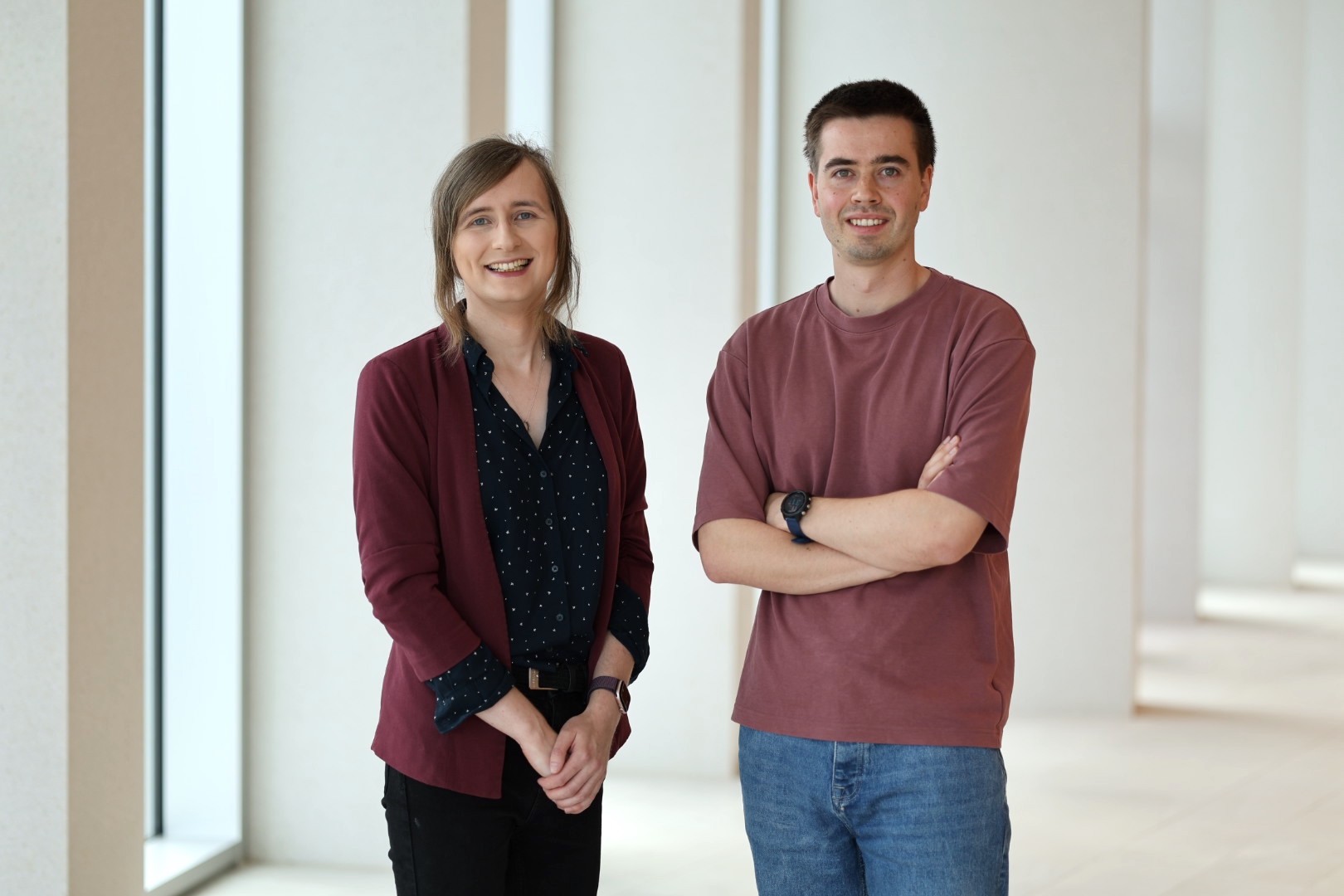
Authors: Coral Westoby and Evan Sutcliffe.
About Nu Quantum
Nu Quantum is the category creator and leader in distributed quantum computing. The company’s approach represents a shorter path to useful quantum computing by implementing a modular layer for interconnecting multiple QPUs into a single, more powerful distributed quantum computer. This ‘Entanglement Fabric’ approach to interoperable networking of quantum computers presents a faster and more scalable method to deliver useful fault-tolerant quantum computing for industrial users. Founded in 2018, the company has raised over $70 million from investors and now has more than 80 team members located primarily in Cambridge and Los Angeles. For additional information, visit nu-quantum.com.